
Competitor Blog Metrics Guide: 9 Signals to Track on Any Rival's Content Strategy
Synopsis
On-page SEO isn't just for your own site. A competitor's title tags, headers, and pricing copy reveal their positioning shifts before any announcement. Learn how to read them systematically.
You already know that measuring your own blog matters. But the most underused competitive intelligence available to founders sits right on your competitors' public-facing blog — if you know what to look for.
Competitor blogs quietly reveal strategy.
Competitors publish their content strategy in plain sight. Publish cadence, topic clusters, format choices — all of it is trackable. Here are 9 metrics and signals to monitor on any competitor's blog.
1. Publish Cadence
How often a competitor publishes tells you about their content investment. A sudden spike in publishing frequency signals a growth push or a new content hire. A slowdown can mean budget cuts, a strategic pivot away from content, or a product-focused quarter.
Track month-over-month publish rate. Three months of acceleration usually means they have a content strategy — not just a blog.
2. Topic Clusters
What themes does a competitor return to repeatedly? Topic clusters reveal the customer segments and use cases they're doubling down on. If they've published six posts about 'enterprise security' in six months, that's a content bet — and probably a sales motion too.
3. New Topic Introductions
The first post on a brand new topic is one of the most telling competitor signals available. It typically means they're entering a new market segment, launching a new feature, or shifting their positioning. Watch for topics that have no prior history on their blog.
4. Content Format Mix
Checklists, guides, interviews, case studies, comparison posts — the format a competitor uses signals their funnel strategy. Heavy 'X vs Y' comparison content means they're in acquisition mode. Heavy how-to content means they're focused on activation or retention.
5. Keyword Targeting Patterns
Look at competitor post titles and URLs. What keyword patterns do you see? Long-tail question-based titles signal bottom-of-funnel intent. Broad single-topic titles indicate they're chasing high-volume awareness keywords. This tells you who they're trying to acquire through search.
When a competitor shifts from informational to high-intent comparison content, it often precedes a push on conversion.
6. Featured Customers and Industries
Case studies and 'how X uses us' posts reveal the customers they want more of. When a competitor starts publishing case studies from a new industry vertical, they're either closing deals there or actively pursuing that segment.
7. Linking Patterns
Internal links on competitor blog posts show which product pages they're currently prioritizing. Heavy linking to a new feature page means that feature is getting a go-to-market push. Links to a pricing page from informational posts signal an aggressive conversion play.
8. Author Changes
New contributors or a change in authorship can signal team growth, a content outsourcing shift, or a new content strategy leader. A company that suddenly starts publishing under a founder byline is making a thought leadership play.
9. Post Update Frequency
Competitors who regularly update old posts are investing in SEO at a mature level. This is a signal that they have a dedicated content team and are playing a long game in organic search. If you're competing for similar keywords, this matters.
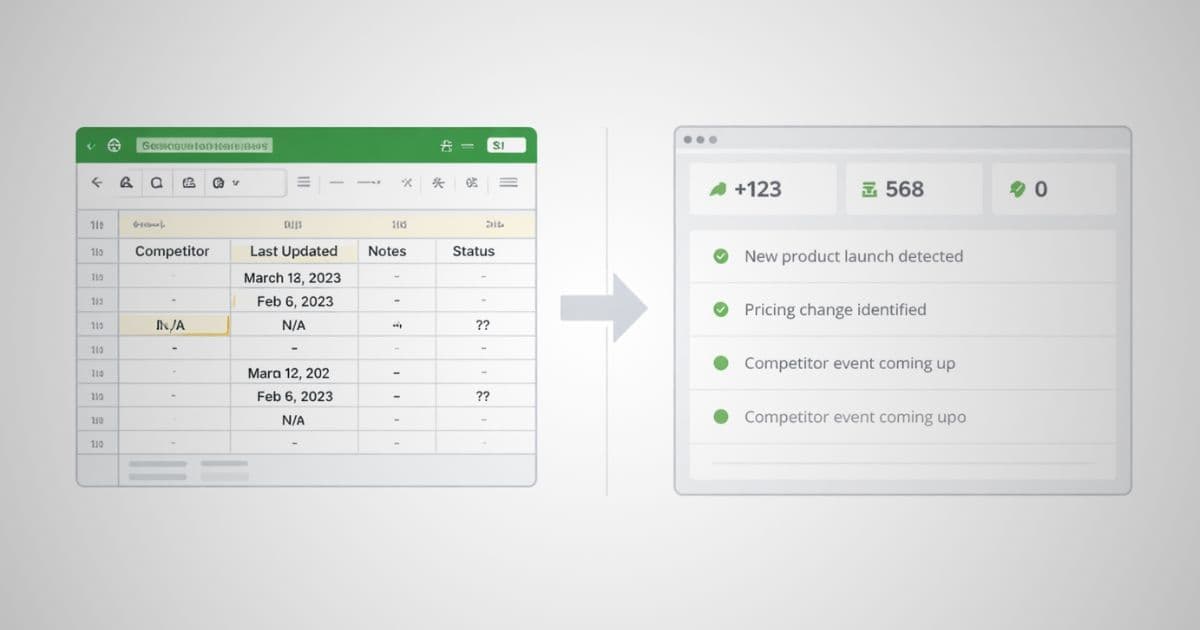
Tracking all of this manually across multiple competitors is the kind of work that falls off calendars fast. Palrox surfaces competitor blog changes automatically, so you get the signal without the manual monitoring.
About the Author

Jenna Gallo
Business Development
Jenna Gallo
Business Development
Jenna supports Pagezii’s business development, partnering with founders and teams while sharing insights on competitive intelligence and strategy.
Frequently Asked Questions
A sudden increase in publishing frequency signals a content investment push — a new hire, agency engagement, or strategic bet on organic acquisition. A slowdown often indicates budget cuts or a product-focused quarter.
Audience Context
Content strategists and product marketers at B2B SaaS companies who want to systematically decode competitor content strategies and use blog activity as a leading indicator of market moves.
Related Insights
- On-Page SEO Checklist for Competitor Intelligence — Audit rivals across core on-page signals.
- Competitor Monitoring for Product Roadmap Protection — Guard your roadmap from rival feature launches.
- 10 Things Competitor Content Tells You — Extract strategy from rival content gaps.
- Monthly Competitor Intelligence Report Template — Structure insights into a repeatable report.
- The Real Cost of Manual Competitor Tracking — Why spreadsheets cost more than you think.
References
- Content Marketing Institute. (2024). B2B content marketing benchmarks, budgets, and trends. Content Marketing Institute.
- Nielsen, J. (2012). How people read on the web: The eyetracking evidence. Nielsen Norman Group.
- Davenport, T. H., & Parra-Moyano, J. (2023). Use GenAI to uncover new insights into your competitors. Harvard Business Review.
- U.S. Bureau of Labor Statistics. (2024). Occupational outlook handbook: Market research analysts. BLS.gov.
Disclaimer
This article is provided for informational purposes only. Pagezii aims to share practical insights on competitor tracking and market intelligence but does not guarantee completeness, accuracy, or specific business outcomes.