Competitor Monitoring for Product Roadmap Protection: How Product Teams Use It
Synopsis
For product leads. Opens with a competitor blog post signaling a pivot months before announcement. Covers three use cases: feature page changes, blog content as strategic signals, DNS and tech stack updates. Ends with a lightweight weekly competitor review process.
The Post You Did Not See Coming
Competitor monitoring for product roadmap protection is not a nice-to-have — it is the difference between finding out on announcement day and finding out three months earlier.
Three months before a competitor publicly announced they were entering a new product category, they published a blog post.
It was not an announcement. It was a thought leadership piece about a problem in that category, written from a helpful, educational angle. No product mention. No launch date. Just a well-researched piece of content that happened to describe exactly the problem their next product would solve.
By the time they announced the product, they had already indexed six related articles, built 40 backlinks, and captured organic traffic for the queries that mattered. Their sales team already had talking points. Their prospects already had context.
Most product teams found out on the day of the announcement. Some found out when their own customers started asking questions.
One team found out three months earlier, when the first blog post went live. That team had a different set of options.
The competitor's blog post is not content. It is a six-week preview of their next product move. Most teams find out on launch day.
Why Competitor Monitoring Is a Product Function
Competitive intelligence is often treated as a sales or marketing responsibility. Sales needs battlecards. Marketing needs positioning. But the team whose work is most directly affected by competitive moves is product.
Warning: Treating competitive intelligence as a sales or marketing job leaves product teams building in the dark. The roadmap decisions are yours — the signals should be too.
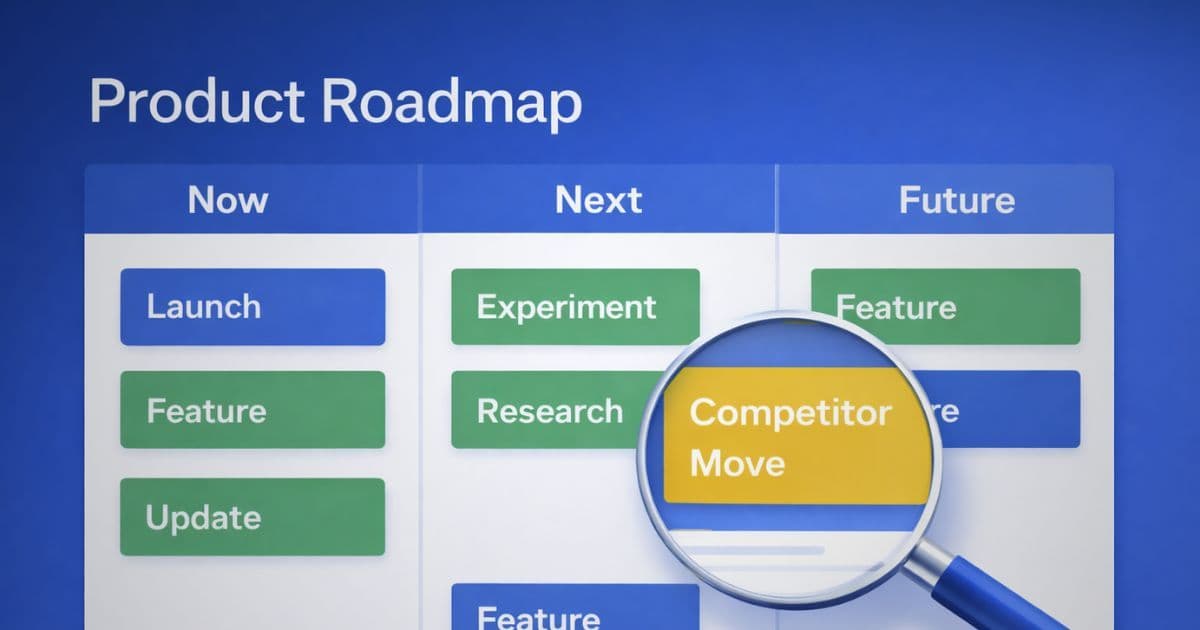
A competitor launching a feature you were planning to ship changes your roadmap. A competitor pivoting into your market changes your positioning and your resource allocation. A competitor winning enterprise customers with an integration you do not have changes your partner strategy.
Product teams that catch these signals early make better roadmap decisions. Teams that catch them late spend quarters reacting.
Three Ways Product Teams Use Competitor Monitoring
Tracking Feature Pages for Product Direction
The features page is one of the most reliable indicators of where a competitor is investing. When a new feature appears, when a feature is reordered or repackaged, or when a feature disappears, each change tells you something about their product priorities.
Palrox monitors features pages continuously. When a competitor adds a new section, removes a feature from their primary list, or restructures how they present capabilities, you get an alert. Not a weekly digest. An alert, the day it happens.
This matters because features page changes often precede formal announcements. A competitor will quietly update their features page before they launch a campaign around the new capability. Catching the page change gives you a window before the market noise starts.
Monitoring Blog Content for Strategic Signals
Blog content is where strategic intent surfaces before it becomes a product announcement. Companies write about the problems they are solving, the customers they are targeting, and the market dynamics they see as opportunities. They do this months before they launch the product or feature that addresses those things.
When a competitor publishes three posts on a topic they have never covered, that is not content marketing. That is a product roadmap preview.
A product team monitoring competitor blog pages can spot these signals early. New topic clusters, new buyer persona language, new use case framing — these are all indicators of strategic direction.
Palrox flags new blog posts across all tracked competitors as part of the weekly summary. A competitor who published three posts in the last week on a topic they have never covered before is worth paying attention to.
For more on how blog content signals strategic moves before announcements, read manual competitor tracking mistakes.
Using Technical Signals as Early Indicators
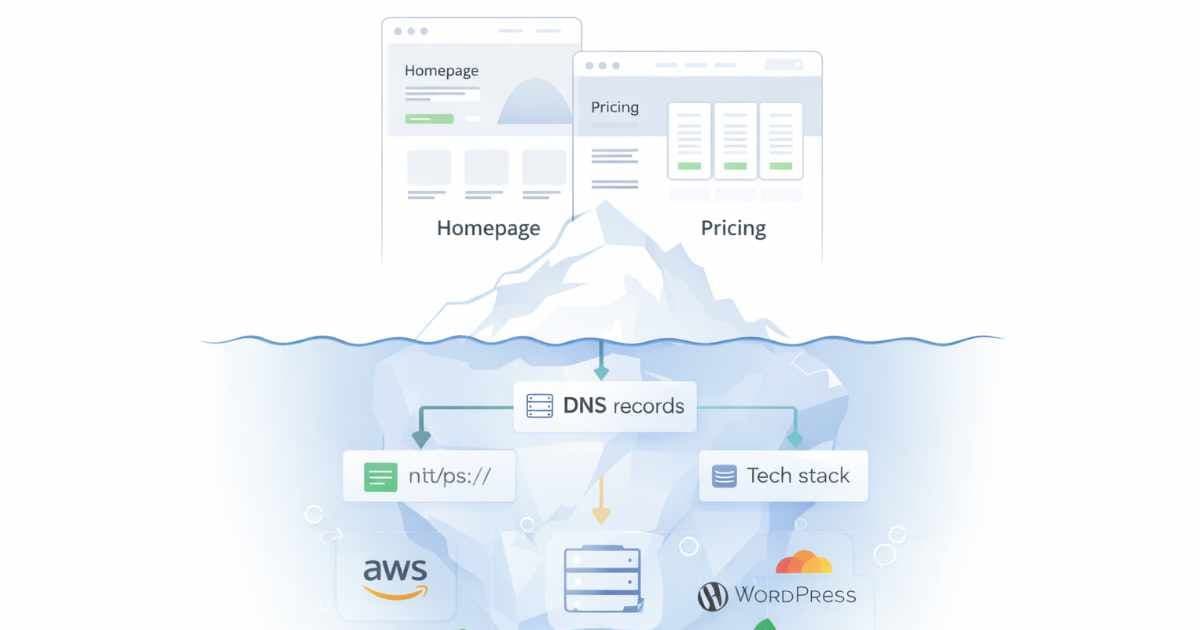
DNS changes and tech stack updates are the least visible competitive signals and often the most revealing. A competitor adding new subdomains is often building new products or entering new markets. A competitor switching payment processors may be expanding internationally. A competitor adding a new analytics tool may be investing in a new growth motion.
These signals require looking below the surface of what a browser shows you. Palrox's technical monitoring layer surfaces these changes automatically alongside page-level alerts.
For a detailed look at what technical signals reveal, read competitor DNS and tech stack signals.
Building a Lightweight Competitor Review Into Your Process
Competitive intelligence does not need to be a separate function or a weekly all-hands agenda item. The most effective approach is a lightweight standing review that takes 15 minutes and surfaces only what changed.
A simple structure that works:
At the start of each week, review the Palrox weekly summary. Note any changes that are relevant to current roadmap priorities. Flag anything that requires a response or further investigation. Share a brief summary in the team Slack or at the start of sprint planning.
That is the whole process. Palrox does the monitoring. You do the interpretation. Your team makes better decisions.
For a look at what the first 30 days of this process actually produces, read automated competitor tracking: 30 days.
The Cost of Finding Out Late
The cost of a missed competitive signal compounds over time. A competitor feature you found out about a month late means a month of customer conversations where your sales team could not address it. A competitor pivot you found out about a quarter late means a quarter of roadmap work that may need to be reconsidered.
The earlier you get the signal, the more options you have. The later you get it, the more you are managing consequences rather than making decisions.
Use competitor monitoring for product roadmap protection and you stop discovering competitor moves from your customers.
About the Author

Jeffrey Huis in't Veld
Co-Founder of Pagezii
Jeffrey Huis in't Veld
Co-Founder of Pagezii
Jeffrey is Pagezii cofounder leading platform architecture, building scalable systems that turn complex competitor data into usable insights.
Frequently Asked Questions
Competitor monitoring for product roadmap protection starts with blog pages. A competitor writing about a new problem space is typically building toward a product that addresses it. Catching that signal early gives you time to evaluate whether to compete, differentiate, or accelerate.
Audience Context
For product leads and heads of product at B2B SaaS companies. They care because a competitor pivot caught late can invalidate an entire quarter of roadmap work.
Related Insights
- Manual Competitor Tracking: What You're Missing — Six months of missed signals, documented
- 30 Days of Automated Competitor Tracking — Build a weekly competitor review process
- Competitor DNS and Tech Stack Signals Explained — Early signals below the surface of any page
- Competitor Pricing Change Alerts for Sales Teams — How pricing moves affect your pipeline
- Is Pagezii Right for Your Company Stage — Who gets the most value from monitoring
References
- Gilad, B. (2015, July 30). Companies collect competitive intelligence, but don’t use it. Harvard Business Review. https://hbr.org/2015/07/companies-collect-competitive-intelligence-but-dont-use-it
- Gilad, B., & Hoppe, M. (2016, June 15). The right way to use competitive intelligence. Harvard Business Review. https://hbr.org/2016/06/the-right-way-to-use-competitive-intelligence
- Valona Intelligence. (2024, October 14). How market intelligence strategy drives competitive breakthroughs. https://valonaintelligence.com/resources/blog/how-your-market-intelligence-strategy-can-help-you-make-better-decisions
- User Intuition. (2026, March 3). Market intelligence: The complete guide. https://www.userintuition.ai/posts/market-intelligence-complete-guide/
- Lyssna. (2025, February 17). Product competitive analysis in 2026: How to & examples. https://www.lyssna.com/blog/product-competitive-analysis/
Disclaimer
This article is provided for informational purposes only. Pagezii aims to share practical insights on competitor tracking and market intelligence but does not guarantee completeness, accuracy, or specific business outcomes.