
8 Best Practices for Monitoring Competitor Blogs (Without Losing Hours Every Week)
Synopsis
Most teams bookmark competitor blogs and forget about them. Here are 8 practices to make competitor blog monitoring consistent, systematic, and actually useful for product and sales decisions.
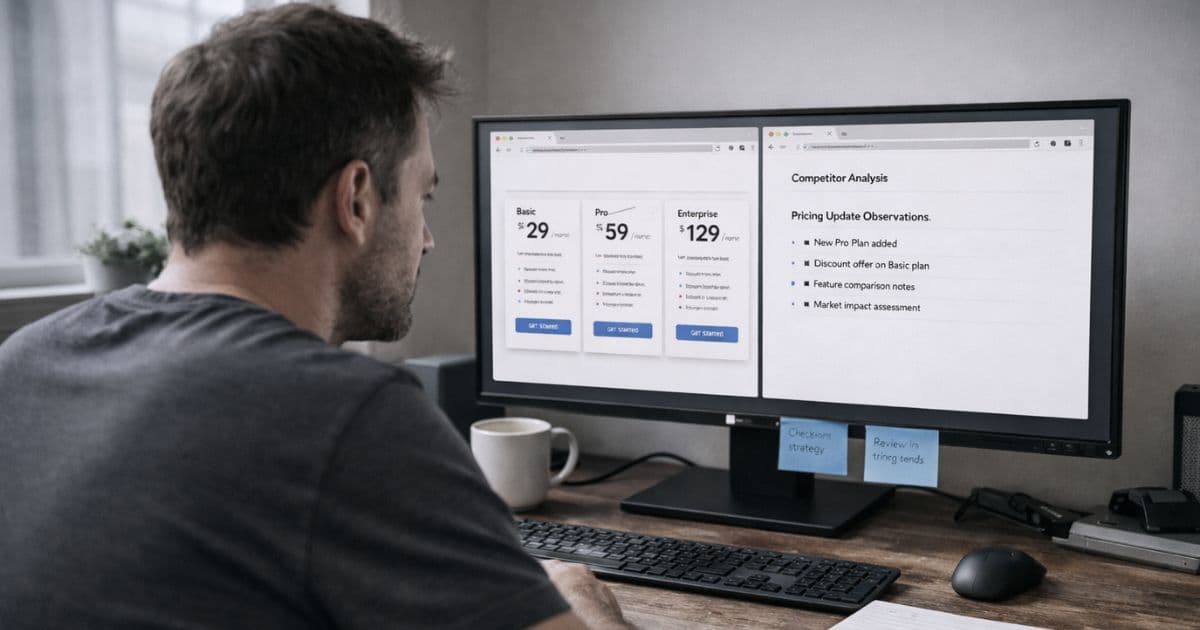
Most teams start monitoring competitor blogs the same way: they bookmark a few pages, check them occasionally, and read whatever shows up in their feed. Within a few months, the habit dies. The checks become less frequent, the notes pile up in a doc nobody opens, and meanwhile competitors are pivoting, launching, and repositioning.
Competitor blog monitoring fails without a structured system and consistent review.
Here are 8 best practices for building a competitor blog monitoring system that actually works.
1. Define What You're Tracking Before You Start
Monitoring for everything means noticing nothing. Before you set up any system, decide what kinds of changes matter. Pricing page updates? New feature announcements? Messaging changes? Blog topic pivots? A focused list makes the signal-to-noise ratio manageable.
Start with 3 competitors and 4 page types: homepage, pricing, features, blog. Expand from there.
2. Track Changes, Not Just Content
Reading a competitor's latest blog post is not the same as monitoring their content strategy. The intelligence is in the change — what they added, what they removed, how the framing shifted. A system that captures diffs, not just snapshots, gives you far more signal.
3. Pay Attention to New Topic Introductions
The first post a competitor publishes on a topic they've never covered is a strategic signal. New topics often preview new customer segments, new product directions, or new positioning angles. Build the habit of spotting net-new topics, not just reading the latest posts.
4. Set a Weekly Review Cadence
Competitor monitoring works on rhythm. A weekly review — even 20 minutes — is far more valuable than an irregular deep-dive once a quarter. Consistent, lightweight review means you catch pivots early. Irregular review means you're always catching up.
The teams that stay ahead aren't the ones who look deepest. They're the ones who look most consistently.
5. Share Intelligence With Your Team
Competitive insights that stay in one person's inbox don't drive decisions. Build a habit of sharing a weekly summary with your product, sales, and marketing team — even just a Slack message with two or three observations. Decisions improve when more of the team has context on what competitors are doing.
6. Track Technical Signals Too
Blog content changes are visible. But some of the most valuable competitor signals are under the surface: DNS changes, tech stack updates, new tools they've added. A competitor adding a new marketing automation tool is a signal. One migrating to a new CRM is a signal. These often surface before any public announcement.
7. Refresh Your Competitor List Quarterly
The competitors you're tracking today may not be the ones that matter most in six months. New entrants, funded startups, and repositioned incumbents can become relevant quickly. Make it a quarterly habit to review your competitor list and add anyone who's entered your space.
8. Replace the Spreadsheet
Every team starts with a spreadsheet. Most eventually realize that manually tracking competitor changes in a doc doesn't scale — changes get missed, the format drifts, and the 'tracker' becomes stale within weeks. The teams who stay ahead the longest are the ones who've replaced the spreadsheet with a system.
Manual competitor tracking spreadsheets break quickly. Sustainable monitoring requires a simple, consistent system.
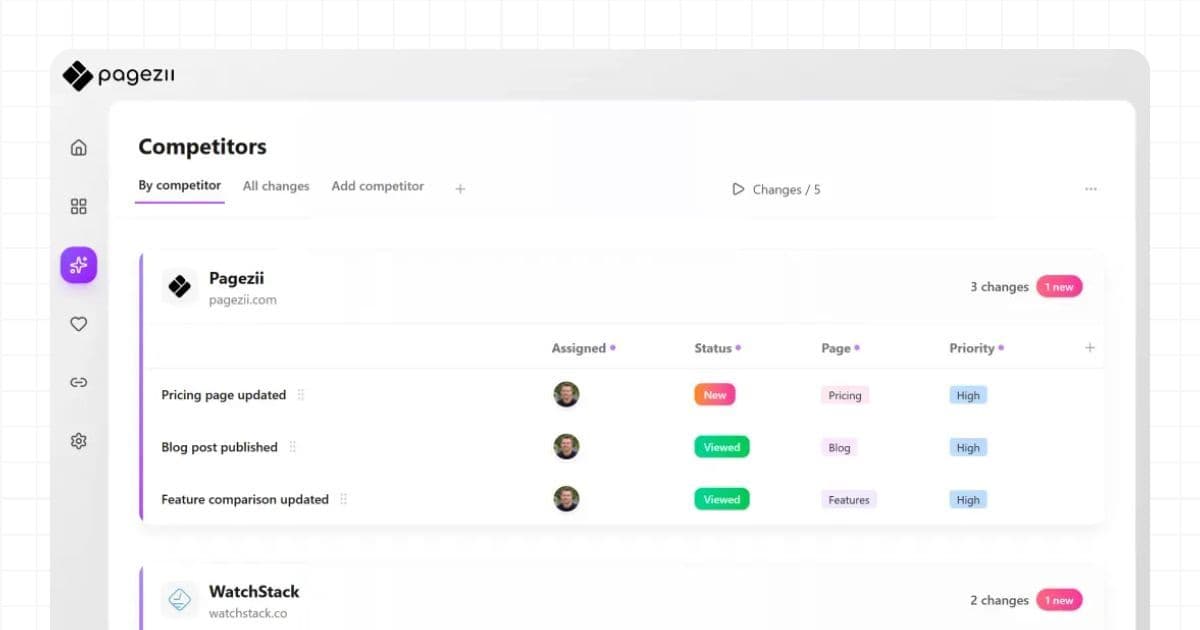
Palrox is that system. Add your competitors, define what pages to track, and get automated alerts and weekly summaries — without the manual work.
About the Author

Jeffrey Huis in't Veld
Co-Founder of Pagezii
Jeffrey Huis in't Veld
Co-Founder of Pagezii
Jeffrey is Pagezii cofounder leading platform architecture, building scalable systems that turn complex competitor data into usable insights.
Frequently Asked Questions
The key is automation and rhythm. Automated page tracking removes the manual burden, and a consistent weekly review cadence — even just 15 minutes — is far more valuable than an irregular quarterly deep-dive.
Audience Context
Founders and product leads at early-stage B2B SaaS companies who have tried tracking competitors manually and want to build a more sustainable, team-wide competitive intelligence habit.
Related Insights
- 10 Things Competitor Content Tells You — Extract strategy from rival content gaps.
- Competitor Blog Metrics Guide — Track the blog signals that reveal rival strategy.
- Replace Your Competitor Tracking Spreadsheet — Faster insights, less manual maintenance.
- Manual Competitor Tracking Mistakes — Blind spots spreadsheets can't catch.
- 30 Days of Automated Competitor Tracking — Real data from a month of monitoring.
- Hire Remote Workers for Your Startup — Build a lean team without geographic limits.
References
- Gilad, B. (2015, July 30). Companies collect competitive intelligence, but don't use it. Harvard Business Review.
- Content Marketing Institute. (2024). B2B content marketing benchmarks, budgets, and trends. Content Marketing Institute.
- Nielsen Norman Group. (2024). Information architecture basics. Nielsen Norman Group.
- U.S. Small Business Administration. (2024). Competitive analysis for small businesses. SBA.gov.
Disclaimer
This article is provided for informational purposes only. Pagezii aims to share practical insights on competitor tracking and market intelligence but does not guarantee completeness, accuracy, or specific business outcomes.