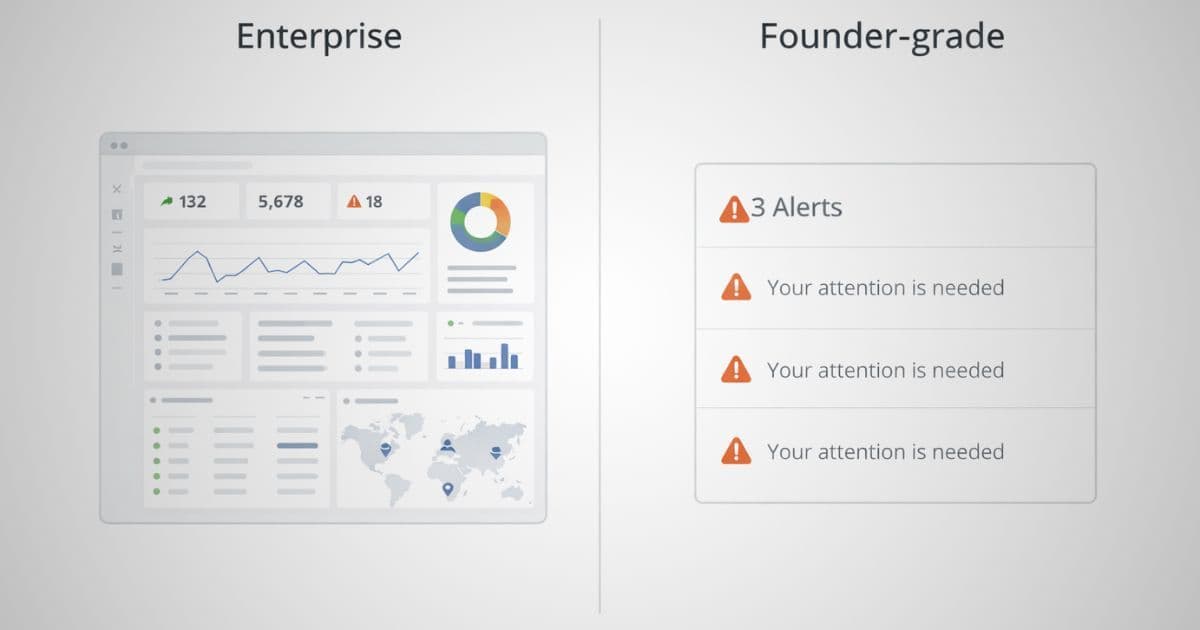
Palrox vs Klue: Enterprise Intel vs Founder-Grade Monitoring
Synopsis
Klue vs Palrox: sales enablement versus monitoring. Klue's battlecards suit large sales teams but add cost and complexity. Palrox wins on simplicity and speed to value. Honest about where Klue is the stronger choice.
Different Jobs, Different Competitor Monitoring Tools
Palrox vs Klue is not a close call — they solve different problems. Understanding which problem you actually have is the fastest path to the right competitor monitoring tool.
Klue and Palrox solve different problems for different teams. Understanding that difference is the fastest way to figure out which one belongs in your stack.
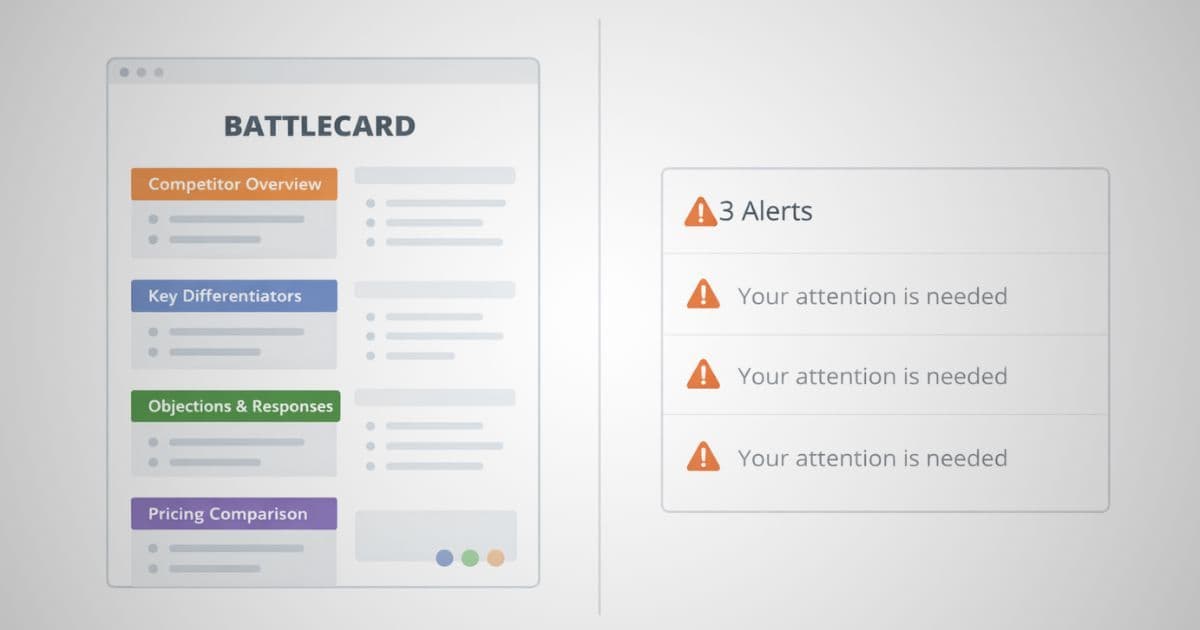
Klue is a competitive enablement platform. It is built to help sales teams handle competitive objections in deals. The core output is battlecards: structured summaries of competitor strengths, weaknesses, and differentiators that sales reps can reference before and during calls.
Palrox is a competitor monitoring platform. It is built to detect when competitors change their pricing, features, messaging, or strategy — and to surface those changes fast so you can act on them.
Both are useful. But they are useful to different people at different stages for different reasons.
Klue builds the battlecard. Palrox fires the alert. Before you can enable your sales team, someone has to know the competitor moved.
What Klue Does Well
Klue's battlecard functionality is genuinely valuable for B2B companies with active sales teams that regularly encounter competitive situations in deals. A well-built battlecard gives a rep the language to handle "why you over competitor X" in the moment, without having to think through the comparison from scratch.
Klue also integrates with CRMs, which means competitive intelligence can be surfaced in the context of a specific deal or account. For teams with five or more salespeople running into the same competitors repeatedly, that workflow integration has real value.
Where Klue Falls Short for Early-Stage Teams
Klue's value scales with the size and activity of your sales team. Before you have multiple reps regularly encountering the same competitive objections, the battlecard model is more infrastructure than you need.
Stale battlecards are worse than no battlecards. If your monitoring is inconsistent, your sales reps will be citing outdated information in live deals.
Klue also requires a sales conversation and enterprise pricing. Like Crayon, it is not self-serve and it is not sized for early-stage budgets. Getting live takes time.
And battlecards are only as current as the competitive intelligence feeding them. If your monitoring is inconsistent — which is likely if it is being done manually — your battlecards go stale. You end up with a sales enablement tool built on outdated information.
For more on the cost of outdated competitive intelligence, read the real cost of manual competitor tracking.
What Palrox Does That Klue Does Not
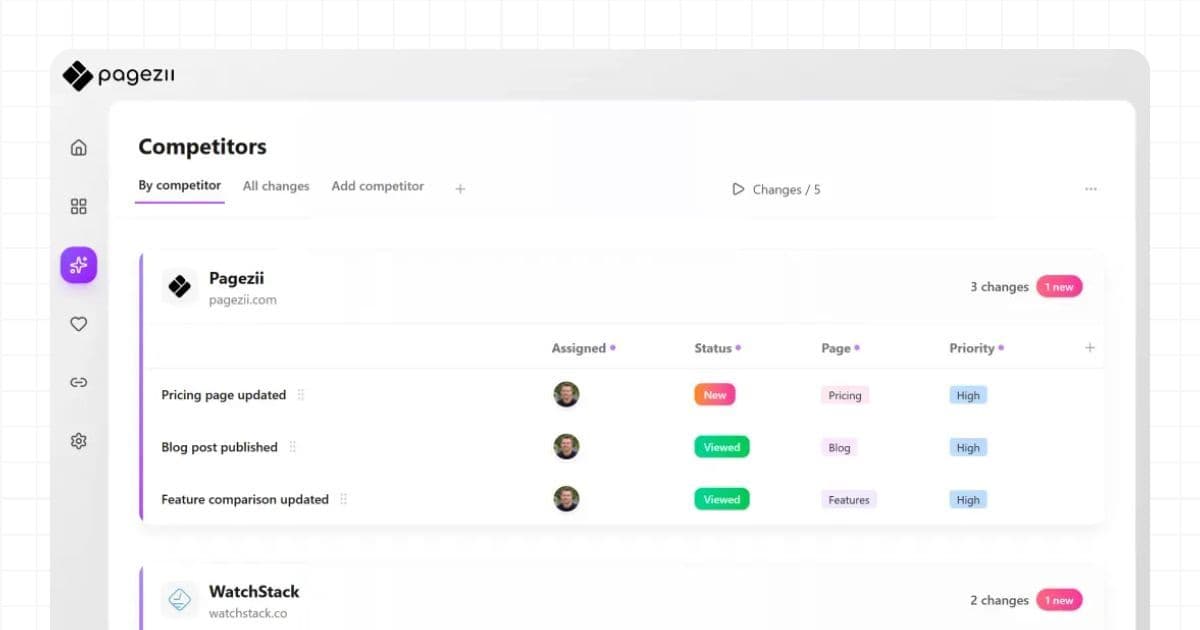
Palrox monitors competitor pages continuously and alerts you when they change. Klue does not do this at the same level of granularity or speed for early-stage teams.
If a competitor drops their pricing on a Tuesday and you have a demo on Thursday, Palrox agezii gets you the alert on Tuesday. You brief your team on Wednesday. Your rep goes into Thursday's demo prepared.
If you are relying on Klue's aggregated intelligence without active page monitoring, you may not know about that pricing change until it comes up in a deal.
For a detailed look at how pricing changes affect sales conversations, read competitor pricing change alerts.
Can Palrox and Klue Be Used Together?
Yes. The two tools serve complementary purposes. Palrox handles monitoring and alerting. Klue handles sales enablement and battlecard distribution. For companies at the stage where both are relevant, using them together makes sense: Palrox feeds current intelligence into the process that Klue distributes to the sales team.
Use Palrox to keep your Klue battlecards current. When Pagezii surfaces a competitor pricing change, update the relevant card before your next sales cycle.
For most early-stage companies, Palrox alone covers what they need. When the sales team grows to the point where battlecard infrastructure becomes valuable, adding Klue on top of Palrox's monitoring layer makes more sense than replacing one with the other.
Who Should Choose Palrox
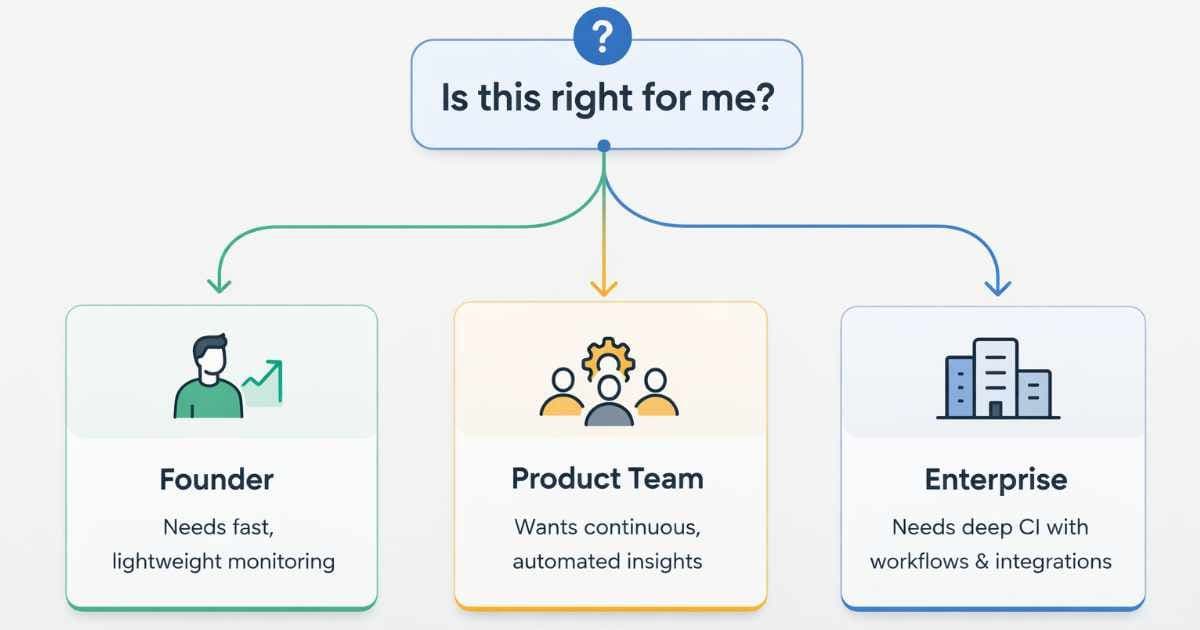
Palrox is the right choice if you are a founder, product lead, or growth operator who needs to know when competitors move — today, without a sales call, at a price that matches your stage. Self-serve setup, public pricing starting at $29 per month, and continuous page monitoring make it the fastest path to actionable competitive intelligence.
For a broader comparison with another enterprise CI platform, read Palrox vs Crayon: competitor monitoring tool comparison.
To figure out whether Palrox fits your specific situation, read is Palrox right for you.
In the Palrox vs Klue decision, Palrox wins on speed and simplicity. Klue wins on sales enablement scale. Most early-stage teams need the former first.
About the Author

Jeffrey Huis in't Veld
Co-Founder of Pagezii
Jeffrey Huis in't Veld
Co-Founder of Pagezii
Jeffrey is Pagezii cofounder leading platform architecture, building scalable systems that turn complex competitor data into usable insights.
Frequently Asked Questions
Klue is a competitive enablement platform designed to help sales teams handle competitive objections. It produces battlecards, integrates with CRMs, and is built for companies with active sales teams that frequently encounter competitive situations in deals.
Audience Context
For growth-stage B2B teams evaluating sales enablement versus monitoring tools. They care about which tool solves their actual bottleneck — alerts or battlecards.
Related Insights
- Competitor Pricing Changes and How to Catch Them — Alerts that reach sales before the next demo
- The Hidden Cost of Manual Competitor Tracking — What stale intelligence actually costs you
- Pagezii vs Crayon: Enterprise CI Compared — See how both tools compare by budget and stage
- Is Pagezii the Right Fit for Your Team — Breakdown by company type and sales team size
- 30 Days of Automated Competitor Monitoring — What your first month of signals looks like
References
- Info-Tech Research Group. (2026, February 11). Sales teams lose competitive deals without disciplined competitive intelligence.
https://www.infotech.com/research/sales-teams-lose-competitive-deals-without-disciplined-competitive-intelligence-according-to-i - Highspot. (2026, March 2). Sales battlecards: Examples to inspire B2B sellers.
https://www.highspot.com/blog/sales-battlecards/ - SiftHub. (2026, March 4). Competitive enablement: What top sales teams know.
https://www.sifthub.io/blog/competitive-enablement - GTMnow. (2021, January 14). 5 best practices for using competitive intelligence in sales enablement.
https://gtmnow.com/sales-enablement-competitive-intelligence/ - Applied Frameworks. (2021, January 3). How to create competitive battlecards.
https://appliedframeworks.com/blog/how-to-create-competitive-battlecards
Disclaimer
This article is provided for informational purposes only. Pagezii aims to share practical insights on competitor tracking and market intelligence but does not guarantee completeness, accuracy, or specific business outcomes.